Why proper storage matters
Slime mold (Physarum polycephalum) is a living organism that grows continuously when conditions are favorable. Without a reliable storage plan, your culture can outgrow its container, dry out, or become contaminated in just a few days. Fortunately, this organism has a natural ability to enter dormancy, and with the right techniques, you can preserve it for weeks, months, or even years.
Storage methods at a glance
| Method | Duration | Difficulty | Revival time | Best for |
|---|---|---|---|---|
| Fridge (4-8 °C) | 1-4 weeks | Easy | 1-3 hours | Short breaks, weekend pauses |
| Sclerotium (dried) | 6 months to 2+ years | Medium | 12-48 hours | Long-term storage, shipping, sharing |
| Freezing (-20 °C) | 1-5+ years | Advanced | 24-72 hours | Archival preservation, research |
| Room temperature (no action) | 2-5 days max | None | Immediate | Active cultures only |
Method 1: Refrigerator storage (1-4 weeks)
Refrigerating slime mold is the simplest approach for short pauses. Cold temperatures slow metabolism dramatically without triggering full dormancy.
Step-by-step fridge storage
- Feed your slime mold 12-24 hours before refrigeration. A well-fed organism stores better than a hungry one.
- Remove old food and any contamination from the agar plate or container. Leftover oats can grow mold in the fridge.
- Wrap the container with plastic wrap or place it inside a sealed plastic bag. Leave a small gap for air exchange. You do not want it completely airtight.
- Place in the fridge at 4-8 °C (39-46 °F). The vegetable drawer works well because the temperature is stable and slightly more humid.
- Check weekly. If the agar looks dry, add a few drops of water. If you see any mold contamination, transfer the slime mold to a fresh plate immediately.
Pro tip: labeling
Always label your container with the date and strain name (if known). After a few weeks in the fridge, cultures start to look similar and it is easy to lose track.
Fridge storage limitations
- Agar will gradually dry out even in sealed containers
- Contamination risk increases after 2-3 weeks
- Some strains are more cold-sensitive than others
- The slime mold may start forming sclerotium on its own if conditions deteriorate
Method 2: Sclerotium creation (months to years)
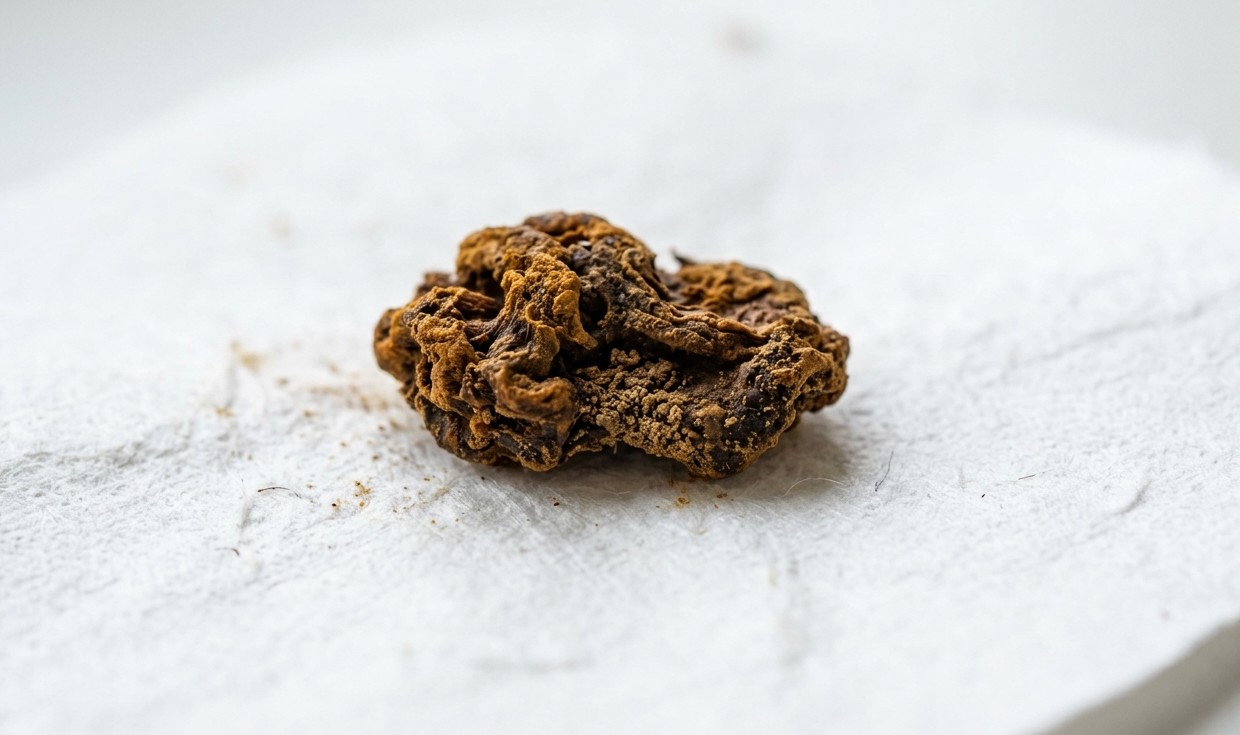
A sclerotium is the natural dried dormant form of Physarum polycephalum. In nature, slime mold enters this state when food runs out or conditions become unfavorable. You can trigger sclerotium formation deliberately for long-term storage.
What is a sclerotium?
When conditions become harsh, the plasmodium withdraws its cytoplasm from its network, concentrates into dense nodules, and builds a protective outer shell. The resulting sclerotium is hard, dry, and paper-like. It can remain viable for months or years when stored properly, and revives when water and food are provided again.
Step-by-step sclerotium creation
- Start with a healthy, well-fed culture. The slime mold needs energy reserves to form a good sclerotium. Feed it generously 24 hours before you begin.
- Transfer to filter paper or plain agar. Place the slime mold on a piece of damp filter paper, paper towel, or a plain agar plate without nutrients. A Petri dish lined with damp filter paper works perfectly.
- Stop feeding. Do not provide any oats or other food source.
- Expose to light. Place the dish in indirect light. Light accelerates sclerotium formation significantly. A windowsill with no direct sun is ideal.
- Allow gradual drying. Leave the lid slightly open or use a vented container. The goal is slow, even drying over 2-5 days. Do not use a fan or heat source.
- Wait for full hardening. The slime mold will gradually turn from bright yellow to orange, then to a dark, dry, crusty texture. This process takes 3-7 days depending on conditions.
- Store the dried sclerotium. Once fully dry, place the filter paper (with the sclerotium still attached) in a labeled envelope, paper bag, or small sealed container. Store at room temperature in a dry, dark place.
Do not rush the drying
If the slime mold dries too quickly, it will die rather than enter dormancy. The organism needs time to reorganize its cellular contents and build protective structures. Rapid drying (using a heater, placing in direct sun, or leaving the lid fully open) often kills the culture instead of preserving it.
Signs of a good sclerotium
- Hard, dry, paper-like texture
- Dark yellow to orange-brown color
- Firmly attached to the filter paper or substrate
- No visible mold or contamination
- No soft or wet spots remaining
Signs of a failed sclerotium
- Black or very dark coloration (may indicate death rather than dormancy)
- Fuzzy mold growth on the surface
- Crumbles to powder when touched (dried too fast)
- Strong unpleasant smell
Method 3: Freezing (-20 °C or lower)
Freezing offers the longest possible preservation, but it requires careful preparation. The main risk is ice crystal formation, which can rupture cell membranes and kill the organism.
Step-by-step freezing protocol
- Create a sclerotium first. Never freeze an active plasmodium directly. The sclerotium form is far more resistant to freezing damage. Follow the steps in Method 2.
- Ensure the sclerotium is fully dried. Any residual moisture will form ice crystals and damage the cells.
- Place in a freezer-safe container. Use a small sealed tube (like a microcentrifuge tube or a small zip-lock bag). Remove as much air as possible.
- Add a desiccant packet (optional but recommended). A small silica gel packet inside the container absorbs any residual moisture.
- Freeze gradually. Place the container in the fridge for 2 hours, then move it to the freezer. Gradual cooling reduces thermal shock.
- Store at -20 °C (standard household freezer) or -80 °C (laboratory freezer) for even longer preservation.
Thawing protocol
- Move the container from freezer to fridge for 2-4 hours
- Then bring to room temperature for another 2-4 hours
- Once at room temperature, follow the standard revival procedure
Research-grade storage
In laboratory settings, Physarum cultures are sometimes stored in liquid nitrogen (-196 °C) with cryoprotectants like glycerol or DMSO. These techniques require specialized equipment and are not practical for hobbyists. Standard freezer storage at -20 °C works well for most purposes.
Common storage mistakes
| Mistake | What happens | How to avoid it |
|---|---|---|
| Leaving old food in the fridge container | Bacterial or mold contamination | Always remove uneaten food before refrigerating |
| Sealing the container completely airtight | Anaerobic conditions, suffocation | Leave a small gap or use vented lids |
| Drying too fast for sclerotium | Cell death instead of dormancy | Allow 3-7 days of gradual drying |
| Freezing an active plasmodium | Ice crystals destroy the cells | Always create a sclerotium first |
| Storing sclerotium in humid conditions | Premature revival or mold growth | Use dry, dark storage with desiccant if possible |
| Forgetting to label containers | Losing track of strains and dates | Always label with date and strain information |
| Using too much water when checking fridge cultures | Drowning the organism | Add just a few drops to the agar surface |
How long can each method preserve slime mold?
Expected viability under proper conditions:
- Fridge (4-8 °C): 1-4 weeks reliably, sometimes up to 6 weeks with weekly maintenance
- Sclerotium at room temperature: 6 months to 2 years is typical. Some reports of successful revival after 3+ years, but viability drops significantly over time.
- Sclerotium in freezer (-20 °C): 2-5 years or more. Laboratory cultures have been revived after over a decade of frozen storage.
- Liquid nitrogen (-196 °C): Decades (laboratory conditions only)
Choosing the right method
Your storage choice depends on how long you need to pause and how much effort you want to invest:
- Going on vacation (1-2 weeks)? Fridge storage is the simplest option. Feed well, clean the plate, wrap it up, and refrigerate.
- Taking a break for a few months? Create a sclerotium. It requires a few days of preparation but gives you months of reliable storage.
- Preserving a specific strain for the long term? Make a sclerotium and freeze it. This combination offers the best long-term viability.
- Sharing or shipping slime mold? A sclerotium on filter paper is the standard method. It is lightweight, durable, and travels well in a simple envelope.
No matter which method you choose, the key to success is starting with a healthy, well-fed culture and taking the time to prepare it properly. A few minutes of careful preparation can save months of waiting for a new culture to arrive. For detailed instructions on bringing a stored culture back to life, see our complete sclerotium revival guide.
If you are new to growing slime mold, start with our beginner's guide to growing Physarum polycephalum before worrying about storage.